
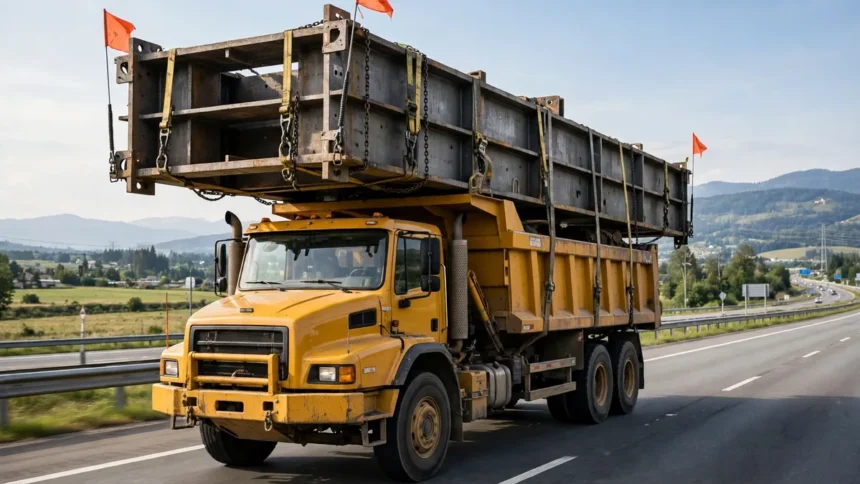
A dump truck does not drive like a pickup with a heavy bed. It is heavier, taller, slower to stop, and blind in places a car is not — and the first time you drive one, the mistakes are almost always the same: braking too late, turning too tight, reversing without a spotter, and treating a loaded truck like an empty one. This guide is the safety habits that matter most the first time you drive a large rental truck — the extension of our guide to how to drive a large truck safely, with the detail that first-timers actually get wrong. Our self-drive trucks sit under the 26,001-pound line, so no commercial licence — a valid driver’s licence is enough, and our non-CDL dump truck rental page covers the sizes.
Loaded is a different truck
The first thing to learn is that a loaded truck and an empty truck are two different vehicles. A 5-yard dump carries about 10,000 pounds of payload — that is the weight of several cars sitting in the bed, and it changes everything: the truck accelerates slower, brakes slower, and leans more in a turn. The load also moves. Dirt, gravel and debris shift when you brake and turn, so a load that was level when you left the yard can be piled against one side by the time you reach the dump. Drive the loaded truck like it is heavier than it looks, because it is: take corners slower than you think you need to, brake earlier than you think you need to, and never let the speed creep up on a downhill. The empty run back is the easy half — but it is still a large truck, and it still stops slower than a car.
Braking distances and following distance
The single most important habit is space. A loaded dump truck needs much more room to stop than a car, and much more than an empty truck — so leave much more following distance than you would in a car, and keep it there even when traffic is slow. Watch the traffic ahead of the vehicle in front of you, not just the vehicle itself: if you can see brake lights two cars ahead, you have time to slow down gently instead of braking hard. Brake early and smoothly, and never brake hard in a turn — a heavy load shifting mid-turn is how a truck ends up where it should not be. If the road is wet, leave more space again, and take the speed down before the bend, not in it. The rule is simple: the truck stops when it stops, not when you want it to, so give it the room.
Blind spots and turning wide
A dump truck has blind spots a car does not: directly behind the bed, along both sides, and low in front of the cab. Check the mirrors before every lane change, and check them again — a car that was visible a second ago can be hidden behind the bed now. When you turn, turn wide: the rear wheels cut inside the front wheels, so a turn that feels generous from the driver’s seat can still clip a kerb, a sign, or a parked car with the back of the truck. Swing wide on right turns especially, and watch the mirrors through the whole turn, not just at the start. If you cannot see where the back of the truck is going, stop and look — it is better to block traffic for ten seconds than to explain a dent to the yard.
Reversing — use a spotter
Reversing a dump truck is the one manoeuvre where a second pair of eyes is not optional. The bed blocks the rear view, the mirrors only show part of what is behind you, and a trailer makes it harder still. If you have someone with you, have them stand where you can see them in the mirror and guide you back — agree on the signals before you start moving, and stop the moment you lose sight of them. If you are alone, get out and look first: walk behind the truck, check for cars, people, low walls and soft ground, and only then reverse — slowly, with the mirrors checked constantly. Never reverse into a space you have not looked at first. It takes a minute, and it is the minute that prevents the most common damage claim in rental reviews.
At the dump site: soft ground, slopes and overhead
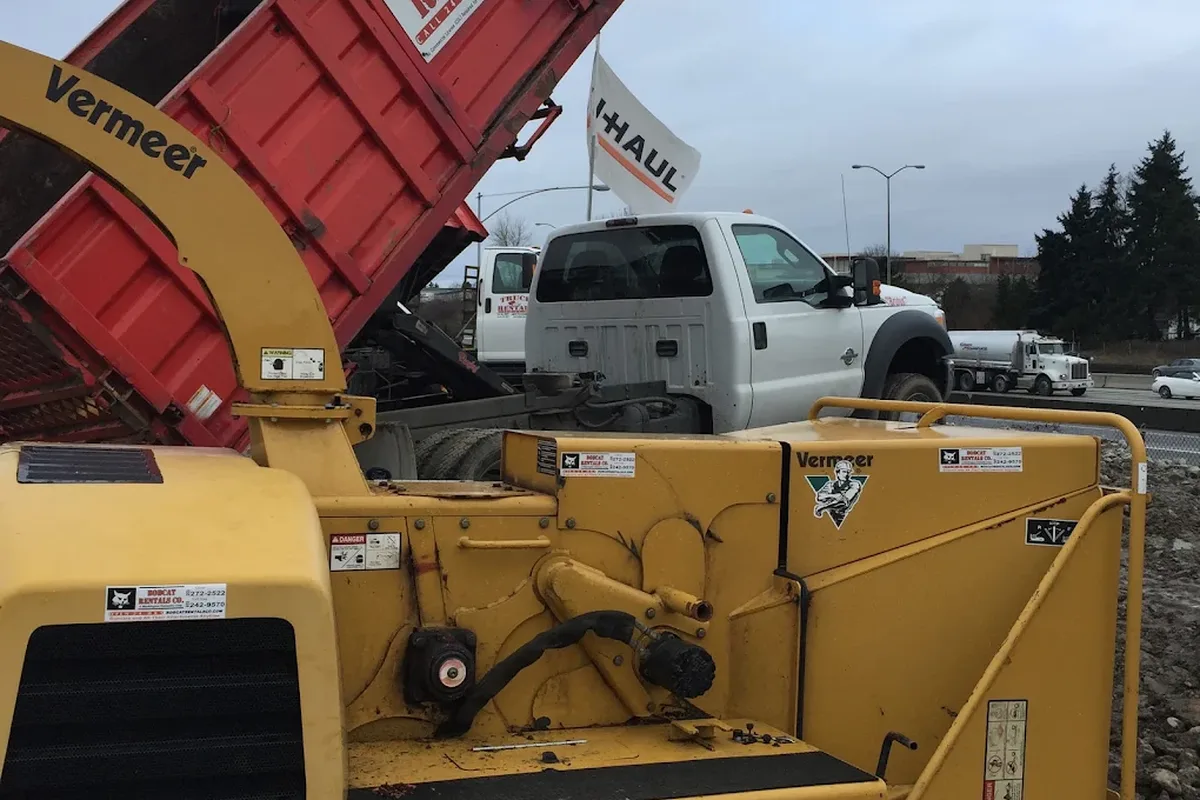
The dump site is where the truck is most at risk, because the ground is not a road. Soft ground, mud and gravel can swallow a wheel, and a slope can tip a raised bed. Drive slowly on the site, stay on the firm ground, and never raise the bed on a slope or on soft ground — the load shifts, the centre of gravity moves, and the truck can go over. Check overhead before you raise the bed: power lines, tree branches, the roof of a transfer station. The Tacoma Recovery & Transfer Center and the county stations have their own rules about where to dump and how to enter — follow the signs and the staff, and if you are not sure where to go, ask before you drive in. The dump run is the end of the job, not the end of the care: the truck still has to get home.
Towing a trailer
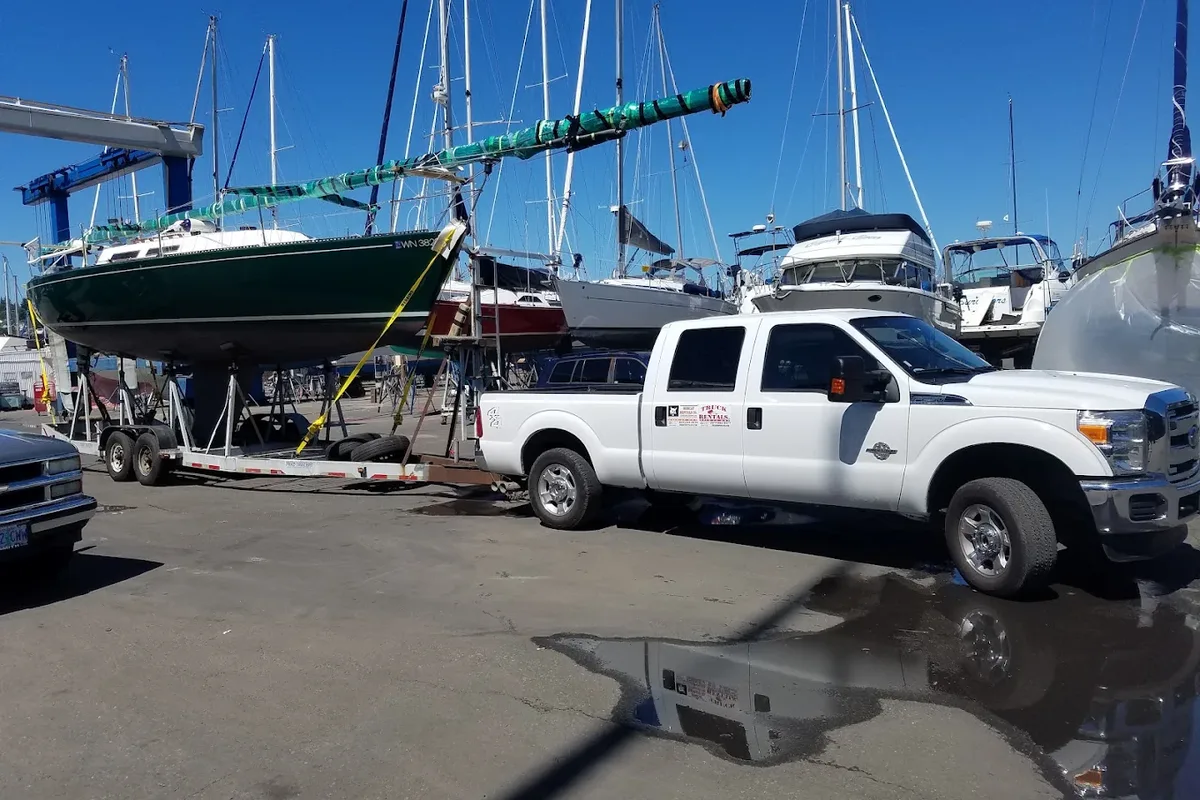
If the job is a trailer instead of a truck, the safety rules change shape but not spirit. The trailer follows where the truck goes — which means it cuts corners tighter, swings wider on turns, and needs even more room to stop. Reversing a trailer is harder than reversing a truck: the trailer turns the opposite way to the steering, so small, slow corrections are the only way, and a spotter matters even more. Before you tow, check the hitch: our trailers take a 2 5/16-inch ball, the coupler must lock down tight, the safety chains go crossed under the tongue, and the 7-pin plug runs the lights and brakes. A half-ton pickup handles the 5×8 and the 5×10; the 7×16 needs a 3/4-ton pickup or larger. And if you are taking the 7×16, call us first: at 14,000 pounds the CDL question depends on the combined weight rating of your truck and the trailer.
If something goes wrong on the road
If the truck breaks down, a tyre goes, or something does not feel right — a spongy brake, steering that pulls, a warning light — pull over somewhere safe and stop. Do not try to drive it back to the yard on a fault you do not understand. Call or text (253) 318-2428 and tell us where you are and what happened; our yard at 17519 Canyon Rd E, Puyallup, WA 98375 is staffed 24 hours a day, and a real person will answer. The same applies before you leave: the 10-minute walkaround is the check that finds most problems in the yard instead of on the road — bed, tyres, lights, fuel gauge, and photographs of anything you find. Ten minutes in the yard is free; an hour on the side of the road is not.
Frequently asked questions
Do I need a CDL to drive a rental dump truck?
Our self-drive trucks sit under the 26,001-pound line, so no commercial licence — a valid driver’s licence is enough. The Federal Motor Carrier Safety Administration explains the CDL rules, and the WA Department of Licensing explains whether you need a CDL for the weight you are driving.
Is a loaded truck really that different to drive?
Yes. A 5-yard dump carries about 10,000 pounds of payload, and the load shifts when you brake and turn. Brake earlier, take corners slower, and leave much more following distance than you would in a car — especially on a downhill.
What is the most common first-timer mistake?
Reversing without looking, or without a spotter. The bed blocks the rear view and the mirrors only show part of what is behind you. Get out and look first, or have someone guide you — and stop the moment you lose sight of them.
What should I do if the truck breaks down?
Pull over somewhere safe and stop. Do not drive it back on a fault you do not understand. Call or text (253) 318-2428, tell us where you are and what happened, and we will work out what happens next.
Call or text (253) 318-2428 to rent a truck. Tell us what you are hauling, which truck you need and the dates — and when you pick it up, take the ten minutes to walk it, then drive it like it is heavier than it looks. Our yard at 17519 Canyon Rd E, Puyallup, WA 98375 is open 24/7.